
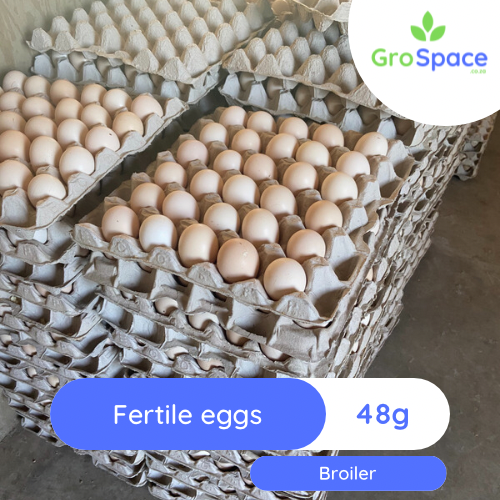
Fertile broiler eggs
When it comes to broiler farming, buying the correct fertile eggs is crucial for several reasons:
- Growth Rate: The size of the chick is influenced by the mass of the egg. By purchasing the right fertile eggs, you ensure that the chicks will have optimal starting conditions for growth.
- Uniformity: Uniformity within the flock is essential in broiler farming. Buying the correct fertile eggs helps maintain consistency in the size, weight, and development of the chicks, which contributes to a more uniform flock overall.
- Performance: The quality of the fertile eggs directly affects the performance of the broilers. By selecting high-quality eggs, you increase the chances of obtaining healthy chicks with better growth potential and improved feed conversion efficiency.
- Genetics: Fertile eggs carry the genetic potential of the parent stock. By purchasing eggs from reputable breeders or suppliers, you can access genetically superior broiler strains, resulting in healthier and more productive birds.
- Profitability: Investing in the correct fertile eggs may lead to better production outcomes and improved profitability. By starting with healthy and genetically superior chicks, you set a solid foundation for the entire broiler production cycle.
In summary, buying the correct fertile eggs is important because it directly influences the growth rate, uniformity, genetic potential, performance, and profitability of the broiler flock. It ensures that you start off with the best possible foundation for successful broiler farming.
Fertile eggs VS Table eggs
Table eggs and fertile eggs serve different purposes and have distinct characteristics:
Table Eggs:
- Purpose: Table eggs are primarily intended for human consumption.
- Fertilization: Table eggs are typically unfertilized, meaning they do not contain a developing embryo.
- Culinary Use: Table eggs are commonly used in cooking, baking, and various culinary preparations.
- Shelf Life: Unfertilized table eggs have a longer shelf life compared to fertile eggs since they do not contain an embryo.
- Availability: Table eggs are widely available in grocery stores and supermarkets for consumers to purchase.
Fertile Eggs
- Purpose: Fertile eggs are used for breeding and hatching to produce chicks.
- Fertilization: Fertile eggs are fertilized by a rooster, containing a developing embryo within the eggshell.
- Incubation: Fertile eggs are typically incubated under specific temperature and humidity conditions to allow the embryo to develop and hatch.
- Hatchability: Fertile eggs have the potential to hatch into chicks if properly incubated.
- Poultry Production: Fertile eggs are essential for maintaining and expanding poultry flocks, whether for meat production or egg-laying purposes.
It’s important to note that while fertile eggs can still be consumed as table eggs, they may have a slightly different taste due to the presence of a developing embryo. Additionally, the nutritional composition of fertile eggs and table eggs is generally similar, although some studies suggest that fertile eggs might have slightly higher levels of certain nutrients.
Ultimately, the choice between table eggs and fertile eggs depends on the intended use and personal preference. If you’re looking for eggs solely for consumption, table eggs are readily available and suitable. However, if you’re interested in poultry breeding or hatching chicks, fertile eggs would be the appropriate choice.
How long are eggs fertile
Fertile eggs, when properly stored and handled, can remain viable for a specific period of time. The viability of fertile eggs depends on various factors, including the breed of the poultry, storage conditions, and handling practices. Here are some general guidelines regarding the viability of fertile eggs:
- Hatching Eggs: Fertile eggs that are intended for incubation to hatch into chicks have a limited shelf life. It is recommended to use these eggs for incubation purposes within 7 to 10 days from the date they are laid. As time passes, the fertility rate and hatchability of the eggs tend to decline.
- Breeding Eggs: Fertile eggs used for breeding purposes, such as maintaining or expanding a poultry flock, have a longer shelf life compared to hatching eggs. These eggs can remain viable for up to 2 to 3 weeks, given proper storage conditions.
It’s important to note that storing fertile eggs correctly is crucial for preserving their viability. Some key considerations for egg storage include:
- Temperature: Fertile eggs should be stored at a consistent temperature between 50 to 68°F (10 to 20°C). Avoid extreme temperature fluctuations as they can negatively impact egg viability.
- Humidity: Maintain moderate humidity levels, around 70 to 75%, to prevent excessive moisture loss or condensation on the eggshell, which can compromise egg quality.
- Turning: If storing fertile eggs for an extended period, it is advisable to periodically rotate or turn the eggs gently to prevent the yolk from settling in one position, which can affect hatchability.
- Cleanliness: Ensure that the fertile eggs are free from any dirt, debris, or contaminants. Dirty eggs should be cleaned with care using appropriate methods to maintain egg quality.
Remember that these guidelines are general recommendations, and specific recommendations from breeders or experts in poultry farming should be followed for optimal results.