
How to setup your GroSpace store professionally to attract customers
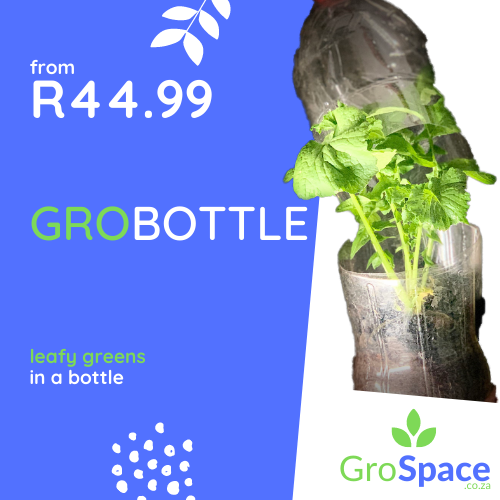
GroBottles are made from old Coca-Cola bottles and other twist top bottles, have a look at our designs to start your GroBottle initiative/business now! If we can sell 1 000 000 GroBottles we will approach Coco-Cola to help us grow the initiative through their marketing channels.
We can grow all kinds of leafy greens in the GroBottle. Choose to save the planet and all of the baby turtles will thank you. 🐢
Our chickens are a high grade AAA quality.
Our minimum order is 10 chickens. If you are looking for smaller numbers you will need to buy together with friends and family to make up a full order of no less than 10 chickens.
If you are looking to start a chicken farm, consider speaking to one of our friendly and professional farming consultants. We would be interested in arranging an off take agreement with you. We have strict regulations however and we are very strict with our quality controls and farming methods. We are looking for poultry farmers that are looking to grow their flock with organic means. Read this post for more info regarding starting your poultry farm today.
The reason for using escrow is to protect buyers and purchasers from time wasters and scammers that waste precious business time and cost farmers, especially hatcheries when they cancel orders or perform fraudulent commercial activities.
Hatch to order is a simple principle whereby a hatchery only hatches out day old chicks when customers pay for an order. At GroSpace we run a decentralised farming system whereby our partner network of poultry farmers hatch day old chicks to order. You place an order and process a secure payment online. Our farmers are notified of the order and the money stays in escrow until the day old chicks order is collected by the courier and delivered to you.
1. RICE FLOUR: This recipe makes shortbread that’s tender enough as it is so you don’t need rice flour. You can use it if you want – the difference is marginal. Just swap out ¼ cup of the flour with rice flour, add it with the flour.Some recipes say you can use cornstarch/cornflour as well. I personally find this leaves a bit of a chalky taste.
2. SUGAR: I like to use icing sugar because the grains are finer so you get a smoother finish on the surface. Also icing sugar is about 1/2 the sweetness of sugar by volume.There are 2 types of icing sugar in Australia – Soft and Pure. Either works (I can’t tell difference in outcome) – I usually use Soft because it’s what I always have. The icing sugar can be substituted with 1/2 cup of white sugar, preferably caster/superfine sugar + 2 tbsp flour.
3. FOOD PROCESSOR / RUBBING BUTTER: Instead of creaming softened butter, the other method is to rub the butter in. This yields a more crumbly shortbread but the surface is rougher – see comparison photo in post. If you wish to use this method (which I believe is the original traditional method, think pre beater days!), this is how to do it:* Cut COLD butter into 1cm / 2/5” cubes;
* Food processor: place all the flour, sugar and butter in a food processor. Pulse 20 times, then whizz on high for 25 seconds until it forms breadcrumbs. Turn out onto work surface and proceed with recipe;
* Rubbing with fingers: Place all the flour and sugar in a bowl, then add butter. Use fingertips to rub butter into flour until it forms breadcrumbs (see video for how it should look). Turn out onto work surface and proceed with recipe.
4. HOT WEATHER WARNING! If it is super hot where you are and/or you have very hot hands with the butter rubbing method, press the dough into the pan then refrigerate for 20 minutes or until chilled.
5. PRECUTTING: To cut out into shapes before baking, it is best to add 2 tbsp flour to make a dough that won’t spread as much when baking. Then roll out into 1 cm / 2/5” thickness and cut into desired shape, place on a baking paper lined tray and refrigerate for 30 minutes. Preheat oven to 150C/300F (fan forced) or 170C/340F (standard) then bake for 15 minutes until the edges are just starting to the brown but the surface is still a pale gold.
6. METHOD NOTES:
7. MEASURING CUPS IN DIFFERENT COUNTRIES: Shortbread is actually quite forgiving. I’ve tested this using both US and Australian measures and I couldn’t tell the difference.
8. Store in an airtight container for 3 days or in the freezer for up to 2 months.
Serving: 25g
Calories: 135cal (7%) Carbohydrates: 13g (4%) Protein: 1g (2%) Fat: 9g (14%) Saturated Fat: 5g (31%) Trans Fat: 1g Cholesterol: 22mg (7%) Sodium: 75mg (3%) Potassium: 16mg Fiber: 1g (4%) Sugar: 4g (4%) Vitamin A: 260IU (5%) Calcium: 4mg Iron: 1mg (6%)
These cookies are called Shortbread because the term “short” is used to describe cookies and pastries with a tender, crumbly melt-in-your-mouth texture. The same terminology is used for shortcrust pastries used in things like Quiche and Pecan Pie.
It’s considered an art to achieve this buttery delicate texture – but it’s actually REALLY EASY!
The trick with shortbread cookies to ensure they are melt-in-your-mouth as they should be is to ensure the dough is nice and crumbly! Here’s how to make shortbread cookies:
You may have read that shortbread cookies should be made with a combination of rice flour and normal flour, and sometimes you see recipes with cornflour (cornstarch).
Rice flour makes the shortbread a little more tender, but having made shortbread many times over the years both with and without using this shortbread recipe, I can honestly say that the difference is barely noticeable. A shortbread recipe with a tougher dough or calling for more kneading may NEED rice flour in order to achieve the right delicate texture. This recipe does not need rice flour.
There’s a few different ways to make shortbread cookies:
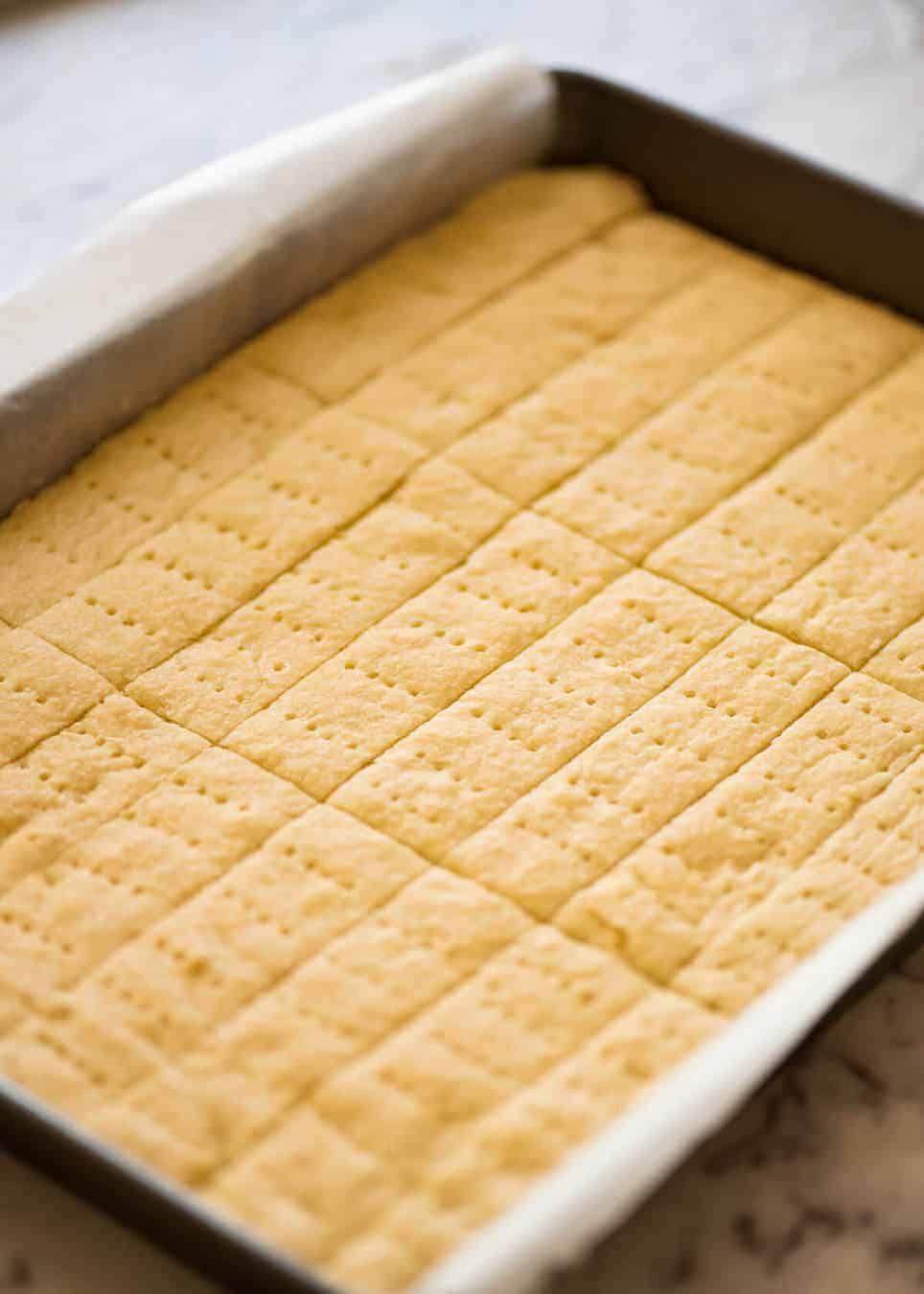
I use the creamed butter method rather than rubbing in cold butter in this Shortbread Cookie recipe. Smoother surface, with the perfect delicate crumbly texture.