Posted on 2 Comments

Farm training the GroSpace way

GroSpace - Sustainable farm training (6)

Welcome to farm training with GroSpace

  • GroSpace - Sustainable farm training (6)
  • GroSpace - Market Garden
  • GroSpace - Farm popcorn
  • GroSpace - Sustainable farm training (2)
  • GroSpace - Sustainable farm training (3)
  • GroSpace - Sustainable farm training (4)
  • GroSpace - Sustainable farm training (5)
  • GroSpace - Sustainable farm training

Everyone is welcome here
Police clearance should be completed before you arrive preferably with a police clearance certificate in hand upon arrival.

Identity documents are a prerequisite to joining the farm training program. Without identification, applicants will not be allowed entry for security purposes. GroSpace protects the security of the environment surrounding training facilities. GroSpace holds the right to expel any applicant from the program if any form of security is breached by the applicant or the applicant is involved in any way with the security breach in question.

What do applicants need to bring to farm training?

Personal items for the farm training:

Applicants need to bring blankets, bedding, working clothing or overalls, food and cooking utensils. Basically what they would use to feed themselves at home. Applicants should also bring soap, washing powder and sanitary ware.

Farming items for the farm training:

If finance allows, each applicant should bring along, a hoe, a shovel, a garden fork, a wheelbarrow, a pair of gumboots, 4 pairs of heavy leather gloves, a scythe, an axe or chainsaw and a bush cutter with fuel.

What will the farm training cover?

Farming the GroSpace way is simple and sustainable. Farm training covers broiler chicken production on open pasture along with composting of manures and waste green organic matter. Farm training focuses on organic plant production, compost production and pasture-raised broiler chicken production.

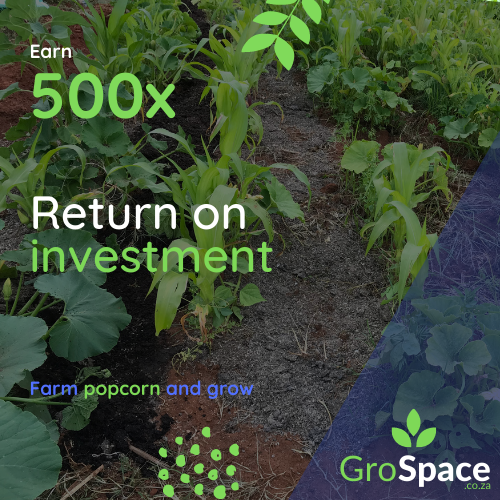
Each trainee Grower will be allocated a working area of 400 square meters of land. Over a 4 month period, this 400 square meter area will be transformed into a fully functioning agriculture zone. We will go through everything from planting seeds, transplanting, cultivating the soil, layout of the planting garden, watering schedule, planting season, harvesting, seed storage. During this time, each trainee Grower will focus on marketing, packaging and logistics along with customer relations online and in person. Learn how to grow popcorn for profit. Learn how no-dig farming is changing the way we farm. Learn how to start a chicken business and how to feed your chickens on compost. Learn about Project Phoenix and also how to start a firewood business

What does farm training cost?

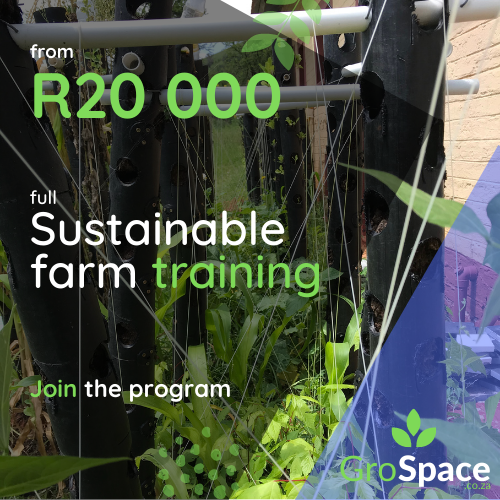
Full seed to harvest training and GroSpace certification costs R20 000. Farm training the GroSpace way should be free which is why we offer the volunteer program.

Volunteer program – farm training

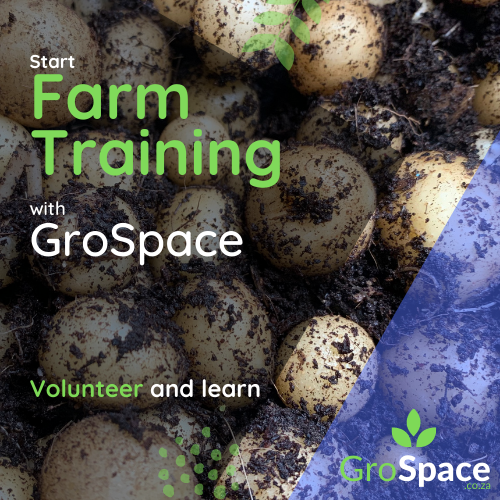
The volunteer program allows volunteers to exchange their time and effort to cover training costs. Volunteer growers can start their training course without any money and walk away with the skills to start their own organic farming business within half a year.

What does the course cover?

  • Seed-to-harvest best practices
  • Soil Science
  • Fertilisation
  • Soil regeneration
  • Livestock integration
  • Crop rotation
  • Finance and Accounting
  • Budgeting
  • Marketing
  • Packaging
  • Logistics
  • Innovation
  • Hydroponics
  • Aeroponics
  • Aquaponics
  • Tooling and infrastructure
  • Sustainability
  • Permaculture
  • Organic farming

How long is the farm training course?

The farm training course stretches across 8 weekend modules. This course is not the volunteer course which lasts for 12 months.

How long can volunteers stay in the farming training program?

Volunteers can stay for a maximum period of 12 months at a time after which they are encouraged to start their own GroSpace. During this time, volunteers will start their own GroSite on GroSpace.

What is a GroSite?

A Grosite is an online website hosted on the GroSpace marketplace. Here you can tell your story, share memories and record data on your experiments and experiences. You can sell your products and offer services. You can receive online payments, ship your products worldwide and all off this is prebuilt so that you can focus on marketing your business.

Do I get certified after the course?

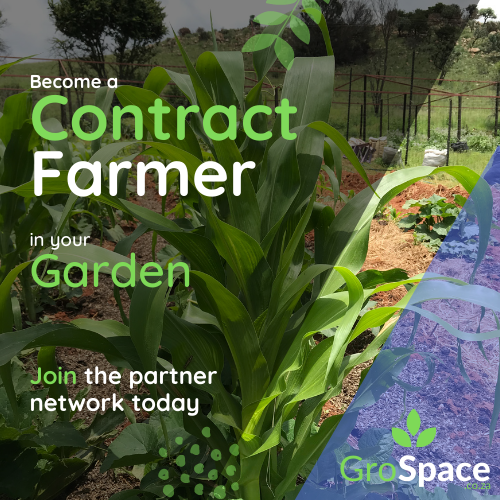
Yes the course is certified by GroSpace. The course is specific for those looking to join the GroSpace Partner Network. GroSpace accredited growers are linked with new jobs and farming opportunities across the GroSpace Network.

Does GroSpace offer farm visits?

Yes, farm visits can be arranged at a nominal fee.

Does GroSpace offer accommodation for the duration of the farm training volunteer program?

Yes, GroSpace offers accommodation for volunteers.

How long is the GroSpace farm training program?

Farm training lasts for 12 months.

When is the next training camp?

Farm training is always open to a limited number of volunteers.

Where is the closest GroSpace farm training ?

We will allocate you to your closest GroSpace farm training facility depending on the address thhat you enter below.


How to apply as a volunteer for the GroSpace farm training course:

Posted on

GroFeeds – How to make affordable layer chicken feed

Comparing Full fat soya with soya oil cake meal

Both products originate from soybeans, but they differ significantly in their nutritional value and usage.

When soybeans undergo heat treatment and all oil is removed for human consumption, the by-product left is known as Soy Oilcake Meal (OCM). This product is widely used as a primary protein ingredient in animal feed, particularly for swine and poultry. While maize primarily provides energy in animal diets, Soy OCM serves mainly as a protein source.

In a different process, soybeans are extruded, and not all the fat/oil is removed, resulting in a product called Full Fat Soy. As the name implies, Full Fat Soy retains a high fat content, making it a valuable alternative energy source compared to maize (starch). In diets where energy is limiting, Full Fat Soy is included to boost the diet’s energy content. It also has a good protein percentage and thus serves as a protein source as well.

Both Soy OCM and Full Fat Soy undergo heat treatment to deactivate the anti-nutritional factor trypsin. Trypsin binds to protein, preventing animals (swine/poultry) from using the protein for growth. Therefore, the higher the quality of Soy OCM and Full Fat Soy, the better the animals will perform. However, quality variation in these products can limit efficient animal production.

If a diet is formulated to include Soy OCM, it cannot be simply replaced with Full Fat Soy due to their different nutritional profiles. Soy OCM is primarily a protein source, whereas Full Fat Soy is added to certain diets to enhance or increase nutritional density, particularly energy content.

These two products also differ in appearance. Full Fat Soy tends to be more “fatty/oily” to the touch, while Soy OCM has a more “flaky” texture.

Producers wanting to use Full Fat Soy in their diets should consult an animal nutritionist to reformulate the diet, balancing the ingredients for efficient production. Soy OCM cannot be replaced by Full Fat Soy on a per kilogram basis; the diet must be reformulated and re-balanced accordingly.

How to prepare soya for animal feed

We all know that nobody has an oil extraction machine or a refinery sitting in the backyard but what you do have is the potential to buy a large capacity pot such as a 50 L pot or a 25 L pot – fill that with boiling water, drop 25 kg of fresh soya beans or dried soya beans and boil them until they are cooked. A smart farmer can save up to R400 per ton when cooking dry soya beans versus purchasing oilcake. Give it a try today

You can also roast the beans which seems to alter the protein only slightly.

Posted on

Understanding Perosis and Twisted Legs in Chicks: Causes and Prevention

Perosis, also known as “slipped tendon” or “chondrodystrophy,” is a nutritional disorder affecting poultry, particularly young chicks. This condition is characterized by the malformation and displacement of the gastrocnemius tendon in the leg, leading to twisted and deformed limbs. It is a significant concern for poultry farmers as it impacts the mobility and overall health of the affected birds, often leading to severe welfare issues and economic losses.

Causes of Perosis

The primary causes of perosis in chicks are linked to nutritional deficiencies, particularly during the critical stages of growth and development. The key nutritional factors include:

  1. Manganese Deficiency: Manganese is essential for proper bone formation and enzyme function. A deficiency in manganese is the most common cause of perosis. It leads to weakened bones and cartilage, causing the tendons to slip from their normal position.
  2. Choline Deficiency: Choline is crucial for the synthesis of phospholipids, which are important for cell membrane integrity and function. Inadequate choline levels can disrupt normal bone development and lead to leg deformities.
  3. Biotin Deficiency: Biotin, also known as Vitamin B7, is vital for fatty acid synthesis and amino acid metabolism. A lack of biotin can result in impaired cartilage development and lead to perosis.
  4. Niacin Deficiency: Niacin (Vitamin B3) plays a role in various metabolic processes. Deficiency in niacin can also contribute to leg deformities and poor overall growth in chicks.
  5. Other Nutritional Imbalances: While manganese, choline, biotin, and niacin are the primary nutrients associated with perosis, other imbalances, such as deficiencies in zinc, folic acid, or pantothenic acid, can exacerbate the condition.

Symptoms of Perosis

Early signs of perosis in chicks include:

  • Swollen hocks (joints in the legs).
  • Twisting and bending of the legs, making walking difficult or impossible.
  • Dislocation of the gastrocnemius tendon, noticeable by touch.
  • Poor growth and reduced activity.

As the condition progresses, affected chicks may become completely immobile, leading to further health complications.

Prevention and Management

Preventing perosis involves ensuring a well-balanced diet with adequate levels of the essential nutrients mentioned above. Here are some strategies to prevent and manage perosis in poultry flocks:

  1. Balanced Nutrition: Provide a diet that meets the specific nutritional requirements of growing chicks. Commercial poultry feeds are typically formulated to contain the necessary vitamins and minerals, but it’s important to ensure the feed is fresh and of high quality.
  2. Supplementation: In cases where deficiencies are identified or suspected, supplementation of manganese, choline, biotin, and niacin can be beneficial. This should be done under the guidance of a poultry nutritionist or veterinarian.
  3. Monitoring and Early Intervention: Regularly monitor the chicks for early signs of leg deformities. Early intervention can prevent the progression of perosis. This includes adjusting the diet and providing supportive care to affected chicks.
  4. Environmental Management: Ensure that the brooding environment is optimal. Adequate space, proper bedding, and appropriate temperature and humidity levels can help reduce the risk of leg problems.
  5. Breeder Nutrition: The nutrition of breeder hens also plays a role in the health of the chicks. Ensure that breeder hens receive a balanced diet to produce healthy, robust chicks.

Conclusion

Perosis is a preventable condition primarily caused by nutritional deficiencies in young chicks. By providing a balanced diet rich in essential nutrients and maintaining proper environmental conditions, poultry farmers can significantly reduce the incidence of perosis and ensure the healthy development of their flocks. Early detection and intervention are key to managing this condition and minimizing its impact on poultry health and productivity.

Posted on

Must-Have Tools: Streamline Your Affiliate Marketing Efforts

Leveraging Facebook and Instagram for Affiliate Marketing Success

In the ever-evolving landscape of digital marketing, social
media platforms have emerged as powerful tools for affiliate marketers to reach
their target audience effectively. Among these platforms, Facebook and
Instagram stand out as giants with billions of active users worldwide.
Leveraging the vast reach and targeting capabilities of these platforms,
affiliate marketers can effectively promote products and drive conversions with
precision. Here’s why focusing on Facebook and Instagram can be a winning strategy
for affiliate marketing success:


1. Massive Reach:

With over 2.8 billion monthly active users on Facebook and
more than 1 billion users on Instagram, these platforms offer unparalleled
reach for affiliate marketers. Whether your target audience is local or global,
chances are they’re active on Facebook or Instagram, providing you with access
to a vast pool of potential customers.


2. Targeted Advertising:

One of the most significant advantages of Facebook and
Instagram advertising is their robust targeting capabilities. Affiliate
marketers can create highly targeted ads based on demographics, interests,
behaviors, and even specific interactions with their content. This precision
targeting ensures that your ads are seen by the most relevant audience,
increasing the likelihood of engagement and conversions.


3. Visual Appeal:

Instagram, in particular, is known for its visually
appealing content, making it an ideal platform for showcasing products through
captivating images and videos. With the ability to create visually stunning ads
and sponsored posts, affiliate marketers can grab the attention of their
audience and effectively communicate the value of the products they’re
promoting.


4. Engagement Opportunities:

Both Facebook and Instagram offer various engagement
features, such as likes, comments, shares, and direct messaging, allowing
affiliate marketers to interact with their audience directly. Engaging with
your audience fosters trust, builds relationships, and increases brand loyalty,
ultimately driving conversions and long-term success.


5. Seamless Integration with E-commerce:

Facebook and Instagram offer seamless integration with
e-commerce platforms, allowing users to shop directly from the platforms
without leaving the app. With features like Facebook Shops and Instagram
Shopping, affiliate marketers can create shoppable posts and ads, making it
easier for customers to discover and purchase products with just a few clicks.

7. Cost-Effective Advertising:

Compared to traditional advertising channels, Facebook and
Instagram advertising can be highly cost-effective, allowing affiliate
marketers to reach a large audience with relatively low ad spend. With options
for both pay-per-click (PPC) and pay-per-impression (PPI) advertising,
marketers can choose the pricing model that best aligns with their goals and
budget.


In conclusion, Facebook and Instagram offer
affiliate marketers powerful platforms to reach and engage with their target
audience effectively. With their massive reach, precise targeting capabilities,
visual appeal, engagement opportunities, seamless e-commerce integration,
robust analytics, and cost-effective advertising options, these platforms
provide everything marketers need to succeed in the competitive world of
affiliate marketing. By focusing on Facebook and Instagram as primary channels
for advertising products, affiliate marketers can maximize their reach, drive
conversions, and ultimately achieve their goals of financial success and
independence

Posted on

Step-by-Step Guide: Launching Your Affiliate Marketing Career

Getting Started in Affiliate Marketing: Your Beginner’s Guide

Embarking on a journey in affiliate marketing can be both
exhilarating and daunting, especially for newcomers to the digital marketing
realm. With the promise of passive income and the allure of flexible work
arrangements, affiliate marketing has become an attractive option for many
aspiring entrepreneurs. However, understanding the basics and laying a solid
foundation is crucial for success in this competitive arena. So, if you’re
ready to dive in, here’s your beginner’s guide to getting started in affiliate
marketing:


1. Understand the Basics

Before diving headfirst into affiliate marketing, it’s
essential to grasp the fundamentals of how it works. Affiliate marketing
operates on a simple premise: you promote products or services offered by other
companies, and in return, you earn a commission for every sale or lead
generated through your referral.


2. Choose Your Niche

Selecting the right niche is paramount to your success as an
affiliate marketer. Your niche should align with your interests, expertise, and
target audience. Conduct thorough research to identify profitable niches with
sufficient demand and relatively low competition.


3. Find Affiliate Programs

Once you’ve identified your niche, the next step is to find
affiliate programs relevant to your chosen niche. Many companies offer
affiliate programs, ranging from large corporations to small businesses and
independent entrepreneurs. Research different affiliate networks, such as
Amazon Associates, ClickBank, ShareASale, and Commission Junction, to find
programs that match your niche and align with your goals.


4. Build Your Platform

Establishing your online presence is essential for success
in affiliate marketing. Whether it’s a blog, website, YouTube channel, social
media profiles, or a combination of these platforms, create a platform where
you can share valuable content and promote affiliate products effectively

5. Create Quality Content

Content is king in the world of affiliate marketing. Produce
high-quality, relevant content that provides value to your audience. Whether
it’s blog posts, videos, product reviews, tutorials, or social media posts,
focus on engaging your audience and building trust with them.


6. Drive Traffic to Your Offers

Once you’ve created valuable content, the next step is to
drive traffic to your affiliate offers. Employ various marketing strategies,
including search engine optimization (SEO), social media marketing, email
marketing, pay-per-click (PPC) advertising, influencer partnerships, and
content marketing, to attract visitors to your platform and promote affiliate
products effectively.


7. Track and Analyze Your Performance

Monitor your affiliate marketing efforts closely and track
key performance metrics, such as clicks, conversions, and commissions earned.
Analyze your data regularly to identify what’s working well and areas for
improvement. Use this information to refine your strategies and optimize your
campaigns for better results.


8. Stay Educated and Adapt

The affiliate marketing landscape is constantly evolving,
with new trends, technologies, and strategies emerging regularly. Stay informed
about industry developments, continue learning new skills, and be willing to
adapt to changes. By staying educated and adaptable, you can stay ahead of the
curve and maximize your success as an affiliate marketer.


In conclusion, getting started in affiliate marketing
requires a combination of knowledge, strategy, and dedication. By understanding
the basics, choosing the right niche, building your platform, creating quality
content, driving traffic to your offers, tracking your performance, and staying
educated and adaptable, you can lay a solid foundation for success in affiliate
marketing. So, if you’re ready to take the plunge, follow this beginner’s guide
and embark on your journey to becoming a successful affiliate marketer.


Posted on

Unlock Your Earning Potential: Exploring the World of Affiliate Marketing

Affiliate marketing is a powerful tool that
allows individuals to earn passive income by promoting products or services on
behalf of merchants. Let’s dive deeper into the world of affiliate marketing to
understand how you can unlock earning potential.

What is Affiliate Marketing?

Affiliate marketing is a performance-based
marketing strategy where affiliates earn a commission for driving sales, leads,
or clicks to a merchant’s website through their promotional efforts.

How Does Affiliate Marketing Work?

Affiliate marketing works by tracking the
unique affiliate link provided to each affiliate. When a consumer clicks on
this link and makes a purchase or performs a specific action, the affiliate
earns a commission.

Benefits of Affiliate Marketing

  • Low startup costs
  • Passive income potential
  • Flexibility to work from anywhere

Consumers are the end-users who purchase
products or services through affiliate links, driving revenue for both
affiliates and merchants.

Different Types of Affiliate Marketing

There are several types of affiliate marketing
models that affiliates can leverage to earn income:

Pay-Per-Sale

In the pay-per-sale model, affiliates earn a
commission for each sale they generate for the merchant through their unique
affiliate link.

Pay-Per-Lead

Affiliates earn a commission for each lead
they generate for the merchant, such as signing up for a newsletter, creating
an account, or requesting more information.

Pay-Per-Click

Affiliates earn a commission based on the
number of clicks generated through their affiliate link, regardless of whether
a sale or lead is generated.

By exploring the various types of affiliate
marketing, you can find the right model that aligns with your skills and
interests to maximize your earning potential.

Unlocking your earning potential through
affiliate marketing is an exciting journey that offers endless possibilities
for growth and success. With dedication, creativity, and strategic planning,
you can transform your passion into a profitable online business that generates
passive income for years to come.

Remember, no success happens overnight, but
with persistence and the right mindset, you can conquer the world of affiliate
marketing and achieve your financial goals.

So what are you waiting for? Start exploring
the world of affiliate marketing today and unlock your earning potential!

Posted on

Why Affiliate Marketing Could Be Right for You

Is Affiliate Marketing
Your Path to Financial Freedom?

In today’s digital landscape, many are turning to affiliate
marketing as a potential route to financial independence. With its promise of
passive income and flexible work arrangements, it’s easy to see why this model
is gaining popularity. But is affiliate marketing truly the ticket to financial
freedom it’s often portrayed to be?


The Appeal and Reality

Affiliate marketing offers flexibility and autonomy,
allowing individuals to choose their niche, work schedule, and marketing
strategies. However, success in affiliate marketing requires dedication,
strategic planning, and continuous learning.


Key Factors for Success

Choosing the right niche, building an audience, creating
quality content, and employing effective promotion strategies are crucial for
success in affiliate marketing. Continuous adaptation to industry changes and
staying informed about new trends are also essential.


Is Affiliate Marketing Right for You?

While affiliate marketing holds promise as a path to
financial freedom, it’s not a get-rich-quick scheme. Success requires time,
effort, and perseverance. If you’re willing to invest in your education, stay
patient, and remain adaptable, affiliate marketing could indeed be your ticket
to financial independence.


In conclusion, affiliate marketing offers opportunities for
those willing to put in the work. With realistic expectations and a strategic
approach, it can be a viable path to achieving your financial goals. So, if
you’re ready to embrace the journey, affiliate marketing might just be the
right fit for you.


Posted on

Broiler Parent Stock – Ross 308

Broiler parent stock farming is a specialized branch of poultry farming focused on raising breeding chickens that produce the fertilized eggs destined to hatch into broiler chickens for meat production. This involves different aspects compared to standard broiler farming, so let’s delve into the key features:

Breeding and Selection Broiler Parent Stock – Ross 308:

  • Breeds and Lines: Unlike broiler farming, which uses commercially bred hybrids, parent stock farms maintain separate lines of male and female breeding chickens. These lines, known as Grandparents (GPs) or Great Grandparents (GGPs), are carefully selected for desired traits like fast growth, disease resistance, and good feed conversion efficiency.
  • Breeding Programs: Parent stock farms implement stringent breeding programs to maintain and improve these traits. This may involve artificial insemination, pedigree recording, and selective breeding based on performance data.
  • Biosecurity: To ensure purity and prevent disease outbreaks, parent stock farms typically operate with high biosecurity measures. This includes restricted access, hygiene protocols, and careful management of flock health.

Rearing and Management Broiler Parent Stock – Ross 308:

  • Two Stages: Unlike broiler chickens, parent stock goes through two distinct stages: rearing and breeding. During rearing (up to 18 weeks), focus is on growth, development, and achieving target body weight without compromising reproductive potential.
  • Feeding and Nutrition: Specific diets are formulated for each stage, considering breed requirements and reproductive health.
  • Lighting and Environment: Lighting programs are carefully controlled to regulate hormone production and stimulate egg laying in breeding hens. Housing and environment management aim to ensure comfort, welfare, and optimal performance.

Egg Production and Hatching Broiler Parent Stock – Ross 308:

  • Age of Lay: Parent hens start laying eggs around 20-22 weeks old and continue for a breeding season that typically lasts around 40-50 weeks.
  • Egg Collection and Storage: Fertilized eggs are meticulously collected, cleaned, disinfected, and stored under controlled temperature and humidity conditions to optimize hatchability.
  • Hatchery Collaboration: Parent stock farms typically collaborate with specialized hatcheries that handle egg incubation and chick hatching according to specific protocols.

Economic Considerations Broiler Parent Stock – Ross 308:

  • Higher Investment: Compared to broiler farming, establishing and operating a parent stock farm requires higher initial investment due to specialized breeding stock, stringent biosecurity measures, and extended production cycles.
  • Market Dependence: Parent stock farm profitability depends on contracts with broiler hatcheries and the overall demand for broiler chicks.
  • Technical Expertise: Successful parent stock farming requires specialized knowledge, management skills, and close attention to breeding programs and flock health.

Ethical Considerations Broiler Parent Stock – Ross 308:

  • Animal Welfare: Concerns exist about the potential for intensive breeding practices and confinement systems impacting animal welfare in parent stock farming. Responsible breeders prioritize providing suitable living conditions and ensuring the health and well-being of their birds.
  • Sustainability: Environmental considerations surrounding feed production, waste management, and responsible breeding practices are becoming increasingly important factors in this sector.

Overall, broiler parent stock farming plays a crucial role in the poultry industry by ensuring a consistent supply of high-quality breeding stock for meat production. However, it’s essential to understand the unique challenges and complexities involved in this specialised field. If you are on this journey then you are one of a handful of people who are privy to this wonderful goldmine of potential.

Here is a link to peruse at your earliest leisure:

Some words that you may have searched to get you here:
Broiler Parent Stock, broiler breeders, ross308, ross 308, broiler ross 308, ross 308 parent stock, Broiler Parent Stock in Johannesburg, Broiler Parent Stock in Pretoria, Broiler Parent Stock in South Africa, Broiler Parent Stock in Durban, Broiler Parent Stock in Cape Town