
Use this link to get access to bulk producers of oil products who will produce large volumes of biowaste as a by-product of their production process.
Use this database to connect with these companies and ask about their by-product waste. What do they do with their by-product? If they can not say, offer them an arrangement to dump their waste at a GroWaste facility. If they have already got dumping arrangements, offer them this story:
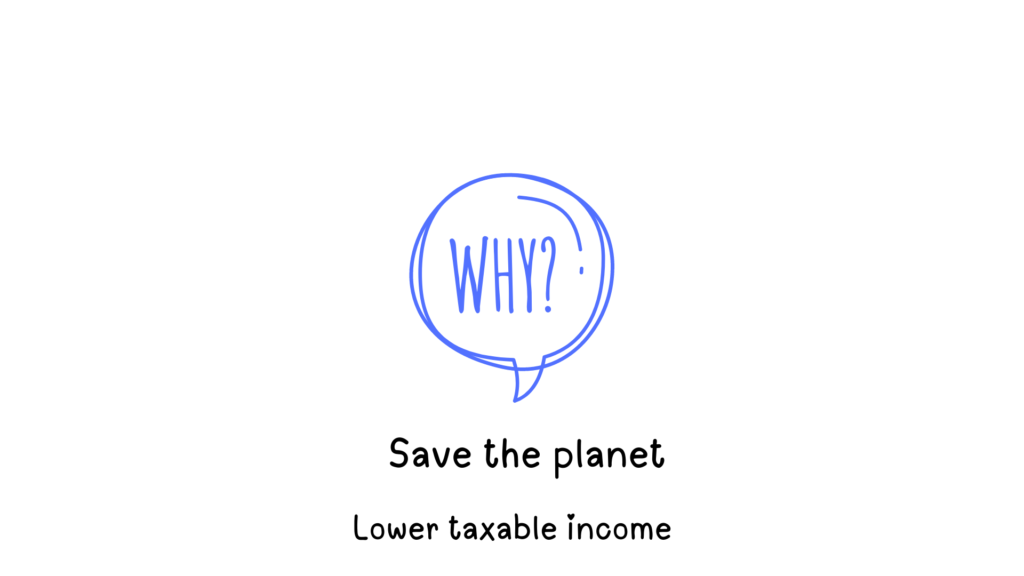
GroBio helps to keep bio-waste out of landfills by processing bio-waste into animal feed, bio-gas and fertiliser to support farmers’ yields. Contribute your bio-waste to earn GroWaste carbon credits which will result in lower taxes and higher profits for your company.

What is in Bio-Gas?
Bio-Gas is a gaseous fuel, consisting of about 80 to 90 per cent methane, whereas LPG is a liquid. LPG stands for liquid petroleum gas. As the name states, LPG is derived from a non-renewable resource – Petroleum. LPG consists of a compressed mixture of propane and butane in liquid form.
Bio-Gas fuel is a serious option for green energy, have a look at these links for more info:
CNG – Compressed natural gas is not a renewable resource
Bio-Gas is 100% renewable
Using biogas from animal waste
Some dairy farms and livestock operations use anaerobic digesters to produce biogas from manure and used bedding material from their barns. Some livestock farmers cover their manure holding ponds (also called manure lagoons) to capture biogas that forms in the lagoons. The methane in the biogas can be burned to heat water and buildings and as fuel in diesel-engine generators to generate electricity for the farm. EIA estimates that in 2021, 19 large dairies and livestock operations in the United States produced a total of about 0.2 billion (183 million) kWh of electricity from biogas.
Is biogas safer than LPG?
While Biogas disperses into the air quickly as it is lighter than air and is much safer in homes than CNG or LPG. BioGas is far safer than LPG. Biogas is a fuel that can be a complete replacement for Petrol and CNG. It can be used in various methods to benefit mankind including fueling vehicles and furnaces in power stations. Power stations will run out of coal, diesel and CNG becasue these are scarce resources whereas bio-gas is a 100% sustainable resource that will be used to generate electricity which will indirectly charge EVs – Electric vehicles in the future. Solar panels are costly to install and the grid system is still a reliable source of power.
Bio-Gas is a 100% renewable and it is a carbon positive fuel.
Carbon Positive fuel? What exactly does this mean?
Carbon positive means that an activity goes beyond achieving net zero carbon emissions to actually create an environmental benefit by removing additional carbon dioxide from the atmosphere. This means that by producing bio-gas GroWaste is removing carbon emissions fro the atmosphere and this activity is carbon positive because it is benefiting the environment by preventing the carbon waste from entering landfill and producing hazardous methane gas. Here is what the world wildlife federation has to say about Bio-Gas.
When compared to virgin natural gas obtained by drilling into the earth, biogas is clearly a more sustainable option. About 80% of natural gas in the United States is extracted by fracking, a process where water, chemicals, and sand are forced deep within the ground to break up rock formations. The fracking process can cause significant damage to ecosystems and landscapes. Landfills and digesters produce a similar fuel without the environmental toll from the fracking process, utilizing material that already exists and would otherwise go to waste.
And there are additional benefits of biogas. Removing the abundant supply of animal manure and food waste from the environment prevents nitrogen pollution and runoff into water resources. Biogas also helps mitigate methane emissions that would have otherwise escaped from landfills or manure lagoons. Using this methane as a fuel dramatically reduces its climate impact by converting it into CO2, which is up to 34 times less potent as a greenhouse gas.
https://www.worldwildlife.org/blogs/sustainability-works/posts/is-biogas-a-green-energy-source
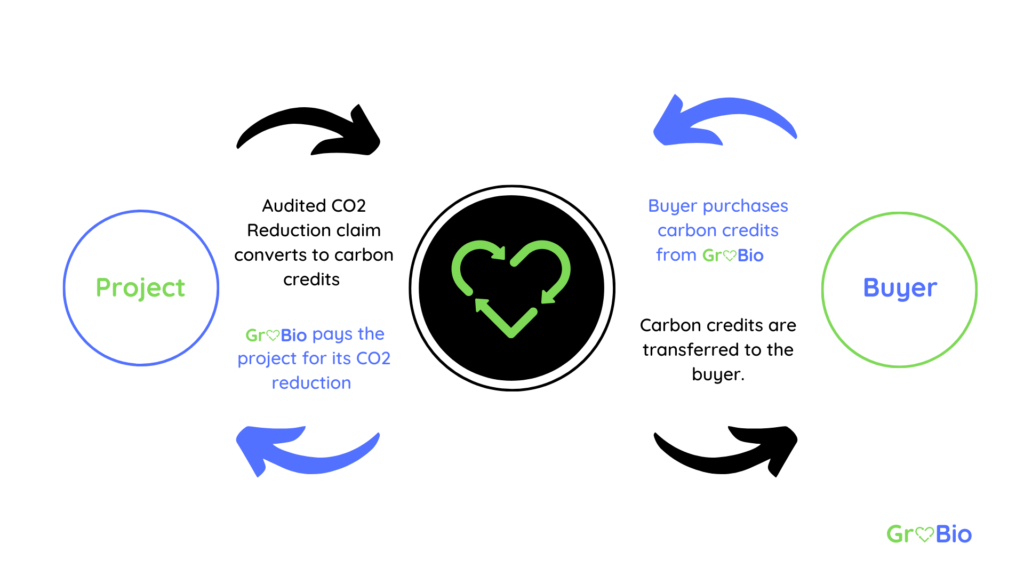
Understanding carbon credits:
How to make money with carbon credits:
The Carbon Tax Act in South Africa makes carbon credits fungible. The current tax rate is R144/t of carbon dioxide-equivalent (CO2e) emissions and, globally, all countries that are party to the Paris Agreement, which is aimed at lowering emissions by 45% by 2030 and reaching net-zero by 2050, must implement carbon prices of $20/t of CO2e emissions by 2030.
The help of every farmer, rancher, and private landowner is necessary to produce enough carbon offsets to achieve the vision of global carbon neutrality—or at least come close. The good news is that anyone who owns or operates land can use the production and sale of carbon offsets to increase their profit margin while helping the environment.
https://carboncredits.com/how-to-make-money-producing-and-selling-carbon-offsets/
How much does a carbon credit cost?
The price of a carbon credit varies depending on the market that you are purchasing from. The carbon price has risen more than 200% since the start of 2021, due to factors including soaring fuel prices that have also prompted some power generators to switch to coal, resulting in higher emissions and demand for permits. The average price for a Carbon Credit in Europe is $91.6.
How much is the carbon tax for a carbon credit?
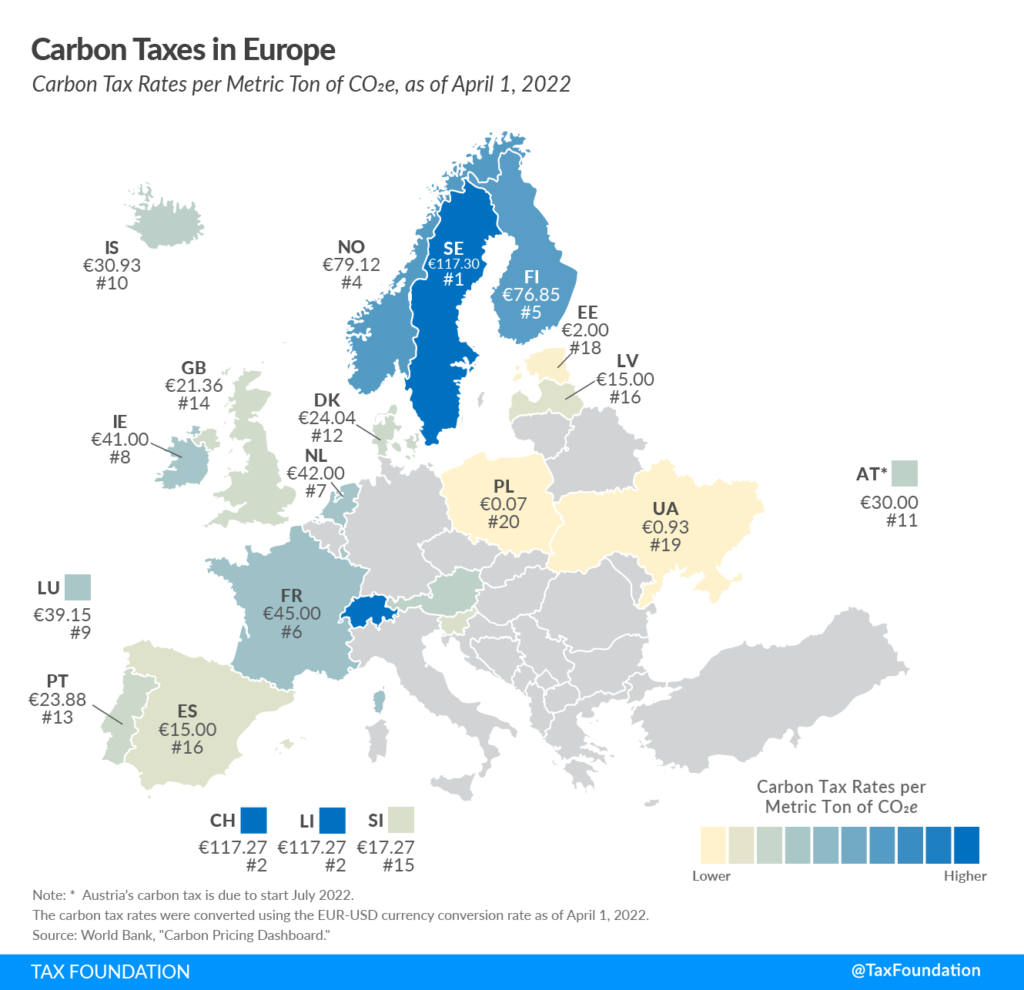
The average carbon tax for a Carbon Credit in Europe is $47.31. The range is astounding; from Poland($0.08) to Sweden($129.89) in 2022.
Why is the current price for carbon credits in Europe higher than the average price for carbon credits in Europe?
Speculation due to the increased demand for fossil fuels during the current fuel crisis has led to an increase in the price of carbon credits. This speculation revolved around the potential release of expansive compulsory carbon taxes to mitigate the overconsumption of scarce resources during the energy crisis of 2020-2023.
Carbon Credits Explained:
Here’s a quick example: Disney is only allowed to emit 400 tons of CO2 per year, but they know that their operations will result in 600 tons of CO2 emissions. To avoid a financial penalty, Disney can make up for the extra 200 tons by purchasing credits from GroBio. GroBio will sequestrate 200 tons of CO2 per year making GroBio a carbon-positive business. When Disney purchases 200 carbon credits from GroBio, Disney will avoid the tax penalties that are incurred for over-emission of CO2.
Looking deeper into this carbon tax example: Imaging that the carbon credits that GroBio sells are selling at $91.6 or R1584.66 each. If the carbon tax in Sweden is $117 per ton then Disney purchases these carbon credits from GroBio and makes an $25.4 tax avoidance on the tax that they would have paid if they had forgone the opportunity to purchase carbon credits from GroBio. 200 tons x $25.4 = $5400 or R94 088 savings.
Carbon Credits trading:
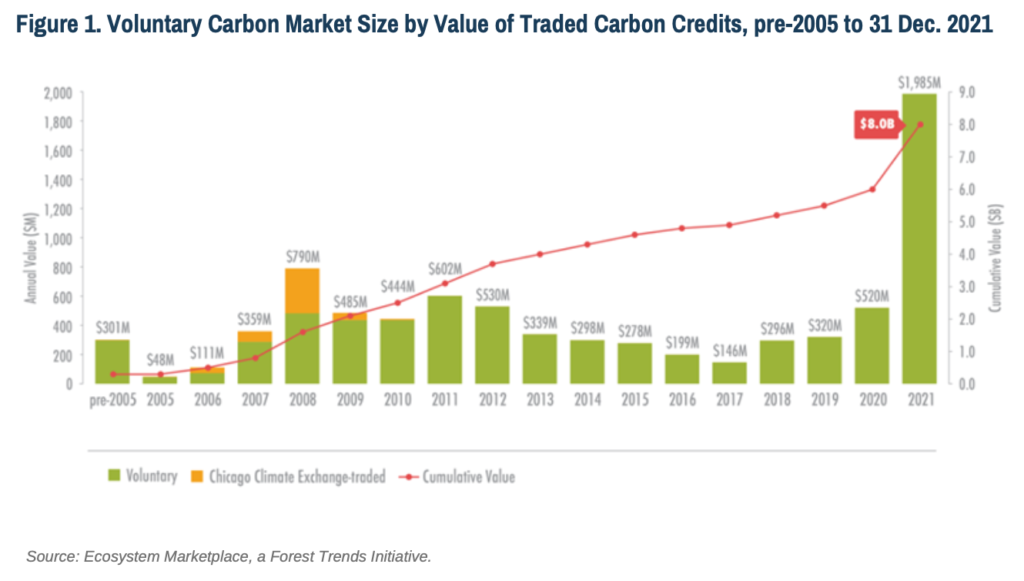
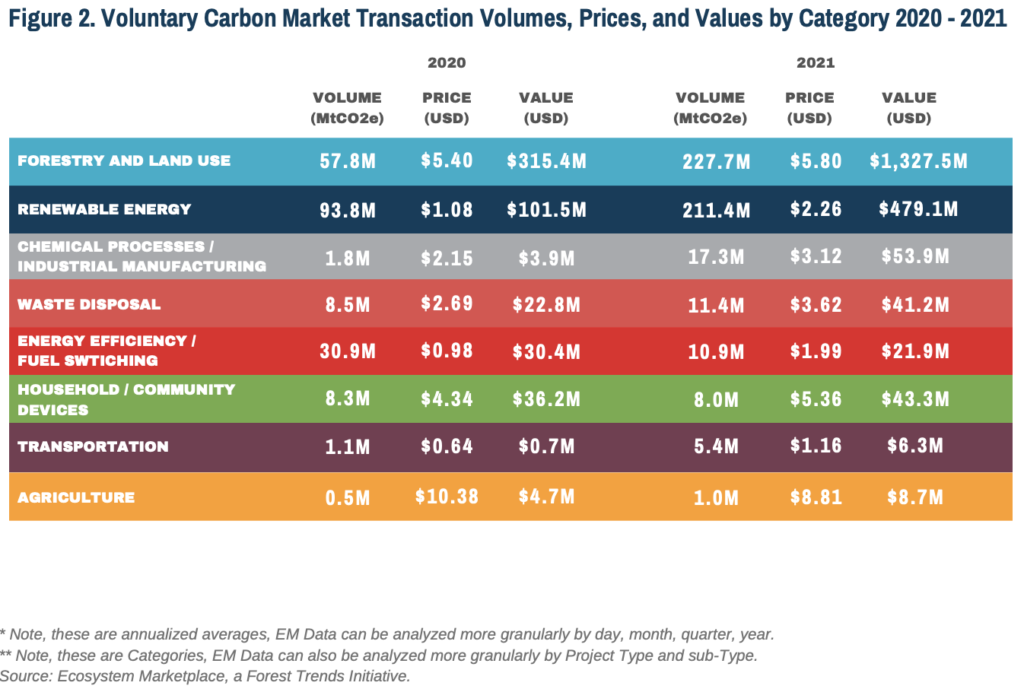
Using the images below, take note that the carbon credit trading volume quadrupled between 2020 and 2021.
Green Bonds and Loans
Apply for funding with a sustainable business concept that is built towards regeneration of the environment through reforestation, regenerative agriculture and/or renewable energy. You can also invest in organisations that are focusing on fostering carbon positive business.
In China, for example, the required Green Credit Guideline was issued by the China Banking Regulatory Commission and the People’s Bank of China and has resulted in 10% of the portfolios of China’s biggest banks consisting of loans given out to green projects. As another example, in Malaysia, 28 financial institutions have participated in 319 green projects, resulting in $875 million worth of loans as of 2018.
https://terrapass.com/blog/carbon-finance-systems-what-is-involved-and-how-can-you-participate
How Are Carbon Credits Created?
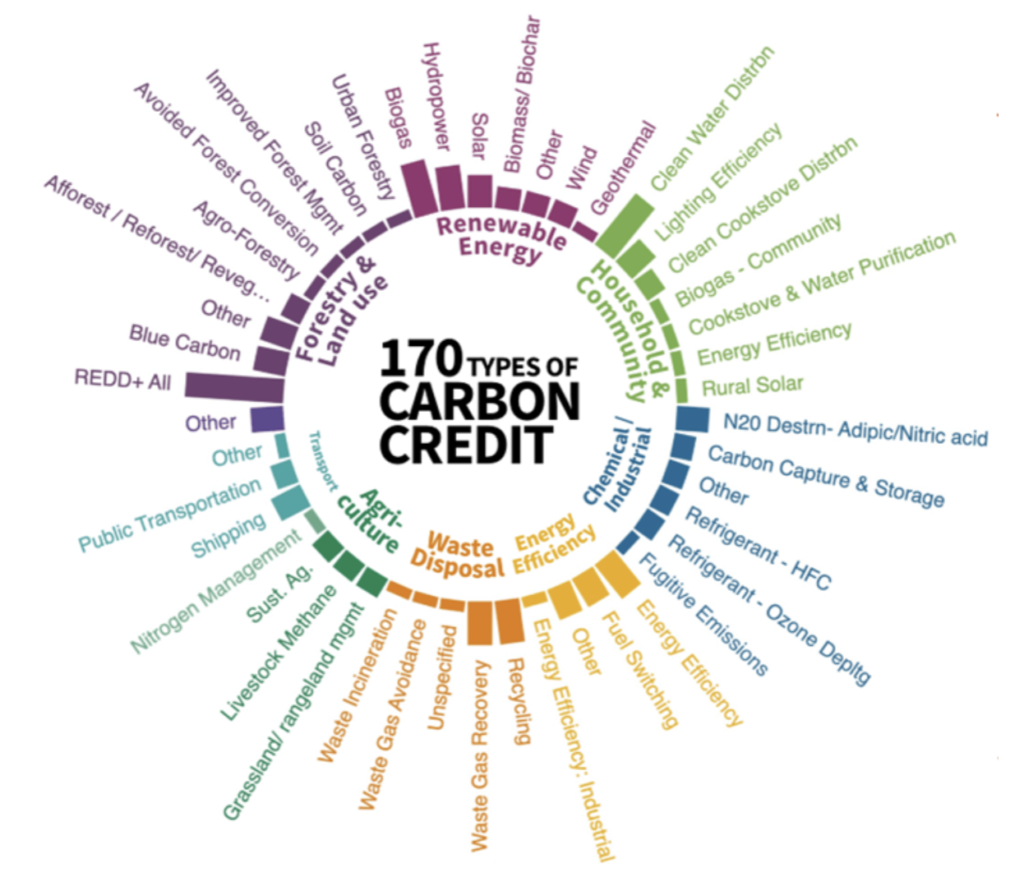
Carbon credits are created when one ton of CO2 is removed from the atmosphere. Carbon credits are granted post audit for projects that are removing CO2 in addition to a business as usual approach. This can be accomplished through project management companies that own and operate low-emission projects that remove and reduce atmospheric carbon concentrations. The second method to qualify for carbon credits also reduces the overall concentration of carbon and is accomplished when companies alter their business practices to purposefully reduce their emissions. Use the image below to understand the activities that are best for generating carbon credits.
Are you looking to buy/sell carbon credits?
Purchasing carbon credits is one way for a company to address emissions it is unable to eliminate. Carbon credits are certificates representing quantities of greenhouse gases that have been kept out of the air or removed from it.

Where does GroBio operate?
Every farm that GroSpace invests into is audited by GroBio for sustainability pracatices. When you purchase carbon credits, they will contribute towards carbon sequestration on every farm that GroSpace invests into.

What is Sustainable Farming?
Sustainable farming encompasses farming practices that consider the ecological cycles in nature. Sustainable farming focuses on the macro and the microorganisms on a farm. Sustainable farming focuses on regenerative farming practices not based on non-renewable energy. Sustainable farming uses a holistic approach to farming based on renewable energy, ecosystem development and education. This contributes to the growth of nutritious and healthy food as well as brings up the standard of living of the farmer. Sustainable farmers can sell carbon credits on GroSpace.
A good example of sustainable farming would be a free-range flock of Potch Koekoeks that feed on food waste from retailers and restaurants. In the case of a lodeg the food waste from the lodge could feed the chickens and then their manure can be composted and used to grow veggies to feed the guests that visit the lodge. Also remember that the eggs from the chickens could be used to supplement t
Invest in GroBio
Companies purchase carbon credits from the GroBio GroShop on GroSpace. Companies that are carbon negative can use these carbon credits to write off the tax that they would otherwise pay at R144/ton of CO2 emissions. The market is set to grow according to Mckinsey:
The Taskforce on Scaling Voluntary Carbon Markets (TSVCM), sponsored by the Institute of International Finance (IIF) with knowledge support from McKinsey, estimates that demand for carbon credits could increase by a factor of 15 or more by 2030 and by a factor of up to 100 by 2050. Overall, the market for carbon credits could be worth upward of $50 billion in 2030.
https://www.mckinsey.com/capabilities/sustainability/our-insights/a-blueprint-for-scaling-voluntary-carbon-markets-to-meet-the-climate-challenge
Going Green is the new bubble – 7 years from today (20/12/2022) this bubble will retrace by 51% using the Fibonacci sequence and then grow parabolically over the next 20 years into 2050.
How does GroBio work?
Food waste
For each ton of food waste diverted from landfill, GroBio produces 1 carbon credit that can be sold on GroSpace to companies looking to balance their carbon emissions and lower their taxable income.
Pasteurised feed
Food waste from restaurants, and retailers is pasteurised, dried and mixed into a nutrient-balanced feed for livestock consumption. The livestock feed is called the GroFeed. Human feed will be researched and developed to support low-income households.
Livestock farming
GroFeed is fed to Livestock as a sustainable carbon-positive feed. Each ton is converted into eggs or meat and manure as a by-product. This manure along with the bedding are converted into biogas at a nearby GroBio plant.
Bio-Gas generation
Biogas is generated from silage post harvest along with manure and bedding of livestock. Broiler chickens produce around 2.5kg of manure per 6 week cycle. Layer birds produce 25kg per year. The biomass input is converted into biogas and a byproduct called slurry. The slurry from the biogas plant is used as a liquid organic fertiliser to feed the soil of GroSpace contract farmers that are growing crops.
New York City spends roughly $400 million each year to transport 14 million tons of waste to incinerators and landfills. Diverting that waste to anaerobic digestion would turn a cost into an opportunity, generating revenue from energy production and co-products.
New York Times, June 2, 2017
Composting
Rural farrms without access to a nearby GroBio facility can compost their biomass. Rural farmers can compost the biomass from their farm and neighbouring farms. Biomass includes food waste, manure, bedding, cardboard and silage from grains and plant material from vegetables. Biomass is composted in windrows. Windrows heat the biomass to over 70 degrees celsius and all bacterial and viral pathogens are neutralised during this process. The moisture content drops from around 40% down to 20% during a 21 day period where windrows are rotated on alternate days to allow air to mix into the windrows to feed aerobic bacteria that are feeding on the biomass. This compost is used as bedding litter on a continuous basis to save the input costs of purchasing wood shavings for subsequent cycles of broiler chickens.
Current stakeholders in the industry
Get involved
Start collecting food waste from target areas and join the green revolution powered by GroBio.
Target areas:
Restaurants
Schools
Mines
Jails
Hospitals
Municipalities
If you are involved with any of the following target areas, feel free to enter your contact details into the form below and apply to supply food waste to your nearest GroBio facility.